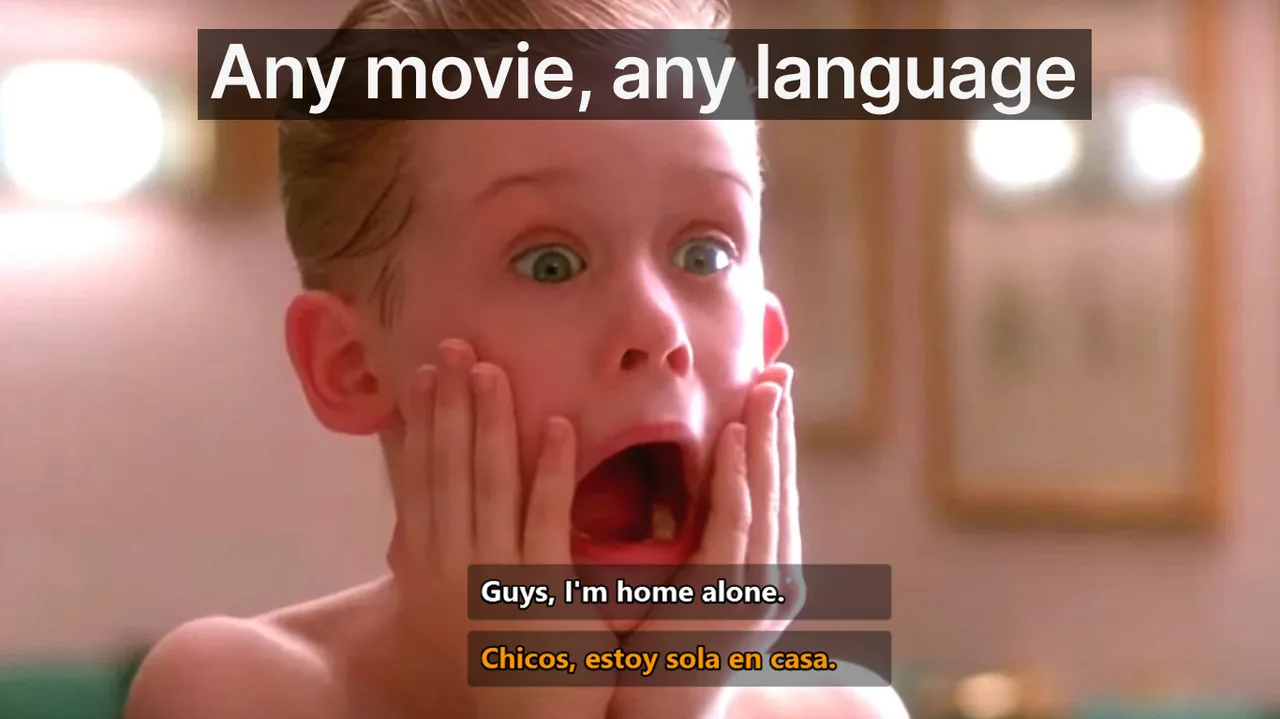
YouTube is one of the most powerful free resources for language learners, but most people use it wrong. They watch passively, rely on auto-generated captions as a crutch, and wonder why their listening comprehension barely moves after months of effort. The solution is not more hours — it is a structured YouTube dual subtitles system that turns casual viewing into deliberate, measurable practice. This guide gives you that system in full: how to build a content pipeline, how to run a seven-day cycle, how to mine phrases that stick, and how to track real progress instead of false confidence.
Contents
- Why most YouTube language learners plateau
- Build your three-layer content pipeline
- The seven-day weekly system
- Choosing the right videos for maximum vocabulary return
- The technical setup for YouTube dual subtitles
- Phrase mining in depth: what to capture and how
- Metrics that separate real progress from false confidence
- Common mistakes and how to avoid them
- Scaling the system beyond YouTube
- Frequently asked questions
- Putting it all together: a sustainable long-term practice
- References and further reading
Why most YouTube language learners plateau
Research on input-based learning consistently shows that comprehensible input — content you can understand roughly 80–90% of without external help — is the engine of acquisition. YouTube breaks this model in two ways:
- Too fast, too colloquial: native-speed speech, slang, and ellipsis make comprehension drop below the 80% threshold.
- No structured repetition: you watch a video once, catch maybe 60% of the vocabulary, and never revisit that language cluster.
Dual subtitles fix the first problem by restoring comprehensibility. A deliberate weekly system fixes the second by adding spaced review and output practice. Without both fixes, progress stalls.
Build your three-layer content pipeline
Before you watch a single minute, curate your channel list. Random consumption is the enemy of vocabulary depth. The goal is lexical repetition — hearing the same words and constructions across multiple contexts until they feel automatic. A three-layer structure creates that repetition without boredom.
Layer 1 — Core channels (3 channels, watched every week)
Choose channels where you genuinely enjoy the topic. Language anxiety drops when interest is high. Good candidates: tech review channels, cooking channels, science explainers, documentary series. The channel should publish at least one video per week so you never run out of fresh material. Stick with the same three channels for at least four weeks before swapping — topic consistency means the same domain vocabulary recycles repeatedly.
Layer 2 — Stretch channels (1-2 harder channels)
Pick channels whose speech rate or register is noticeably harder than your comfort zone: live streams, debate programs, stand-up comedy, or regional accents you find difficult. You will understand less here, and that is the point. Difficulty pressure forces you to rely on context rather than word-by-word decoding — exactly the skill that unlocks fluency. Use stretch channels on days when energy is high (typically Day 1 of your weekly cycle).
Layer 3 — Recovery channels (1-2 easier channels)
Keep one or two channels that are slightly below your current level. On low-energy days, comprehension of 90%+ delivers the dopamine of success without cognitive overload. Children's educational channels, slow-speech language-learning creators, and animated explainers work well here. These sessions are not wasted time — they reinforce vocabulary you already partially know, consolidating it into passive recognition.
The seven-day weekly system
Each week runs as a single loop: input, processing, output, and review. Here is the exact structure that produces results within four to six weeks of consistent use.
Days 1–3: Immersive input and phrase mining
These are your primary viewing days. Aim for 20–25 minutes of dual-subtitle viewing per session. Speed matters less than focus: watching 20 minutes deliberately beats watching 60 minutes while scrolling your phone.
- Start each session with a stretch or core channel video.
- When a phrase catches your attention — something you could imagine saying yourself — pause and note it. Target 5–8 phrases per session, not words. Phrases carry grammar, register, and collocational context that isolated vocabulary never provides.
- Categorize each phrase by communicative function: opinion ("I would argue that…"), agreement ("Exactly, and what's more…"), transition ("That brings me to…"), clarification ("What I mean by that is…"). Functional categories make phrases retrievable during actual conversation.
- If you enable Live Subtitles alongside YouTube's own caption track, you get real-time machine translation on screen with zero setup — practical for content that lacks official captions.
Days 4–5: Compression and output practice
Raw input without output practice creates passive understanding that never activates in speech. Days 4–5 convert what you mined into usable production vocabulary.
- Review your 15–24 mined phrases from Days 1–3. Cut any phrase you cannot imagine yourself using in the next two weeks — a long list you never consult is worse than a short list you know cold.
- Rewrite each surviving phrase in a sentence about your own life or work. This personalization creates a memory anchor that generic flashcard repetition cannot replicate.
- Record a 60-second spoken summary of one video from Days 1–3, forcing yourself to use at least five of the mined phrases. Play it back and notice which phrases felt natural and which felt like reading off a script — those are your active versus passive vocabulary items.
Days 6–7: Verification and difficulty calibration
The final two days of the cycle serve two purposes: measuring genuine progress and calibrating difficulty for the next week.
- Rewatch a 3–5 minute segment from Day 1 or 2, this time with the native-language subtitle track hidden. Count the percentage of lines you understand before the translation appears. This is your comprehension before translation score — the most honest measure of real listening gain.
- If your score on a core channel is above 85% consistently over two weeks, promote that channel to stretch and find a new core channel. This difficulty ladder prevents comfortable stagnation.
- Log your session adherence — how many of the planned seven sessions you actually completed. Anything above 5 is sustainable progress; below 3 means the session length or channel difficulty needs adjustment, not willpower.
Choosing the right videos for maximum vocabulary return
Not all YouTube content is equal for language learning. The same 20 minutes invested in an optimized format can deliver three times the vocabulary exposure compared to a low-density format.
High-density formats (use as primary input)
- Long-form interviews and podcasts (10–30 min): conversational vocabulary, natural turn-taking, topic depth. Guest interviews repeat domain vocabulary multiple times within one episode.
- Structured explainers and essays: clear thesis progression, academic transitions, high phrase reuse. Channels like Kurzgesagt, Wendover Productions, or domain-specific lecture series are ideal.
- Documentary narration: careful enunciation, formal register, rich descriptive vocabulary. Useful for building academic and written vocabulary alongside spoken comprehension.
Low-density formats (use sparingly)
- Live streams: high noise, frequent off-topic tangents, inconsistent speech quality. Valuable only as stretch material once you handle core channels at 80%+ comprehension.
- Reaction videos and commentary: overlapping speech, rapid register switching, heavy cultural references. Entertaining, but phrase mining is difficult due to fragmented sentence structure.
- Short-form clips under 3 minutes: insufficient context for phrase acquisition. Good for a quick review day, not for primary input sessions.
The technical setup for YouTube dual subtitles
YouTube's built-in auto-translation gives you one option: click the gear icon on any video, select Subtitles/CC, then choose Auto-translate and your native language. This places machine-translated text alongside the original captions. The quality is adequate for high-resource language pairs (English–Spanish, English–French, English–German) and acceptable for intermediate pairs (English–Japanese, English–Portuguese). For languages with fewer YouTube training data, translation errors increase — which is where a dedicated overlay tool outperforms YouTube's native feature.
The Live Subtitles app on Windows intercepts your system audio and generates real-time captions using Microsoft's speech recognition engine, then overlays them on screen. Because it operates system-wide, it works on any video regardless of whether the uploader provided captions — including unlisted videos, live streams, and content in less common languages. You can download it from the Download free
and start using it alongside YouTube in minutes. For a deeper comparison of caption tools for streaming, see our guide to Language Reactor alternatives for Netflix and YouTube.Phrase mining in depth: what to capture and how
Phrase mining is the highest-leverage activity in this system, but it requires discipline to avoid two failure modes: mining too much (cognitive overload) and mining too little (no vocabulary growth).
What makes a phrase worth mining?
- You would not have produced it yourself — if you already know it, note it for confidence but do not add it to the active study list.
- It has broad applicability — domain-specific jargon is valuable only if you regularly discuss that domain. "Mitochondrial respiration" is not worth mining unless you teach biology.
- It contains a structural pattern you can reuse — "The reason this matters is that X" is a frame you can fill with any argument, making it multiply useful.
Storage system that actually works
Notion, a plain text file, or even a paper notebook all work — the tool is irrelevant; the structure is not. Use four columns: the phrase in the target language, its English gloss, the communicative function (opinion / agreement / transition / clarification / narrative), and one personal example sentence you wrote yourself. Review takes under five minutes per session when the list stays under 30 active items.
For guidance on building a similar phrase bank for Netflix content, see Netflix subtitles in two languages — the mining methodology transfers directly.
Metrics that separate real progress from false confidence
Language learners are especially prone to feeling progress that is not there, because passive recognition feels like mastery until you open your mouth. These four metrics keep you honest:
- Comprehension Before Translation (CBT): On a rewatched segment, the percentage of subtitle lines you understand before the native-language translation appears. Target: 70% on core channels after four weeks; 85% after twelve weeks.
- Phrase Activation Rate: Of the phrases mined in a given week, how many did you actually use in your 60-second output recording or in real conversation? Target: at least 50%. If below 30%, reduce your weekly mining volume.
- Session Adherence: Sessions completed divided by sessions planned, expressed as a percentage. Target: 70% or higher (five out of seven days). If adherence drops, shorten sessions rather than skipping them entirely — even 10 minutes of focused viewing outperforms zero.
- Rewind Rate: How often do you rewind the same 10-second segment more than twice in a session? A declining rewind rate on the same channel type signals genuine comprehension improvement rather than vocabulary memorization.
Common mistakes and how to avoid them
Treating dual subtitles as permanent training wheels
Dual subtitles are a stage, not a destination. If you have been using them for six months on the same channel and your CBT score has not moved above 80%, you are probably reading the native-language translation instead of processing the target-language audio. The fix is to periodically hide the translation track for the first pass of each segment, only revealing it to confirm understanding rather than to supply it.
Ignoring prosody in favor of vocabulary
Captions show you what was said, not how it was said. Intonation, stress, rhythm, and pause patterns are invisible in text. As your vocabulary grows, deliberately listen for these features: where does the speaker place stress in a key argument? How do they signal a joke versus a serious statement? Prosody is what makes you sound like a speaker of the language rather than a reader of it.
Changing channels every week
Novelty feels productive but kills vocabulary depth. A new channel means new domain vocabulary, new register, new speech habits — you never develop the familiarity that makes high-speed speech transparent. Commit to your core channel list for a minimum of four weeks. Boredom with a channel is a sign that comprehension is high, which means the channel should be promoted to stretch, not replaced.
Skipping the output step
Listening comprehension and speaking ability are distinct skills. Without the 60-second output recording on Days 4–5, mined phrases stay passive. Many learners skip this step because recording yourself feels uncomfortable. Start with the microphone off if needed — just speak the sentences aloud — but do not eliminate production practice entirely.
Scaling the system beyond YouTube
Once the weekly loop is established, the same methodology extends naturally to other video platforms. Netflix and Amazon Prime offer dual-language subtitle modes through browser extensions. Real-time meeting tools like Google Meet and Zoom provide built-in live captions. For a step-by-step setup of meeting captions, see our Google Meet live captions practical playbook. The Live Subtitles app covers all of these surfaces from a single Windows installation, so your phrase-mining habit can run during remote calls, online classes, and streaming sessions with identical technique. Visit YouTube live captions setup for a platform-specific configuration guide.
Frequently asked questions
Q: How many phrases should I mine per video?
Five to eight per session is the practical ceiling for most learners. Above ten, review friction increases and the activation rate drops sharply. If a single video yields more than eight genuinely useful phrases, split it into two sessions.
Q: Should I mine words or full phrases?
Always prefer full phrases. A phrase like "I tend to find that…" teaches the filler verb, the infinitive structure, and the hedging register simultaneously. The isolated word "tend" teaches almost nothing about how it actually functions in speech.
Q: Which languages work best with YouTube dual subtitles?
YouTube's auto-translate quality is highest for English, Spanish, French, German, Portuguese, Italian, Japanese, and Korean. For languages like Arabic, Hindi, or Mandarin, the translation quality is adequate but contains more errors — supplement with a dedicated captioning tool that uses a better speech recognition model for those languages.
Q: When should I stop using native-language subtitles?
There is no single threshold, but a practical rule is: when your CBT score on a given channel type is consistently above 85% over three consecutive weeks, run one session per week with no native-language subtitles on that channel type. Expand to two sessions the following week, and so on. Abrupt removal of support before comprehension is stable causes regression, not accelerated progress.
Q: How does this system compare to apps like Duolingo or Anki?
Apps like Duolingo provide structured vocabulary introduction with gamification. Anki excels at spaced repetition for individual items. Neither delivers the high-volume, naturalistic input that YouTube offers. They are complementary, not competitive: use an SRS app for vocabulary reinforcement, and use the YouTube system for comprehension and phrase acquisition. Most serious learners combine all three.
Q: What if a video has no captions at all?
YouTube generates auto-captions for most videos in major languages within a few hours of upload. If a video genuinely has no captions and auto-generation is disabled by the uploader, system-level captioning tools like Live Subtitles will still generate real-time transcript from your audio output, giving you the same dual-subtitle effect without relying on YouTube's caption infrastructure.
Putting it all together: a sustainable long-term practice
The YouTube dual subtitles system described here is not a shortcut — it is a framework that converts existing viewing time into deliberate language practice. The critical elements are: a curated three-layer channel pipeline that guarantees vocabulary repetition; a seven-day cycle of input, output, and verification; a lean phrase-mining habit focused on functional phrases rather than raw vocabulary lists; and four honest metrics that tell you whether comprehension is actually improving or just feeling like it is.
Most learners who follow this system consistently for twelve weeks report a measurable shift in their listening confidence — not just on YouTube, but in meetings, podcasts, and real conversations. The transfer happens because the underlying skill is not "YouTube comprehension" but real-time audio processing, and that transfers across every context where spoken language occurs.
Start with one core channel this week. Run one session of 20 minutes with dual subtitles. Mine five phrases, rewrite them in your own context, and record your 60-second summary on Day 4. That is the entire first cycle. Repeat it seven times, and measure your CBT score at the end of Week 7. The number will tell you everything you need to know about whether the system is working for you.
References and further reading
- YouTube Help: captions and subtitle settings
- Yabla — video-based language practice benchmark
- InterSub — subtitle-learning workflow reference
Related Articles
Use Subtitles Across All Your Daily Content
Apply the same dual-subtitles workflow to YouTube, meetings, Netflix, and any Windows app — with one tool.
Download free